Outfit Formulas: What They Are and How to Use Them
What outfit formulas are, how to find your own from outfits you already love, six to start with and how to adapt them for seasons and occasions.
Photos on this page are AI-generated. They show outfit ideas, not real customers or the exact products linked.
An outfit formula is a simple recipe for getting dressed. Instead of thinking about individual pieces, you think in categories: a sweater, straight trousers and loafers. Any sweater, any pair of straight trousers and any loafers you own will make an outfit.
Once you have a few formulas that suit you, getting dressed takes minutes, shopping gets easier and your outfits look more like you. This guide explains how formulas work, how to find your own and how to adapt them as the seasons change.
What an outfit formula is
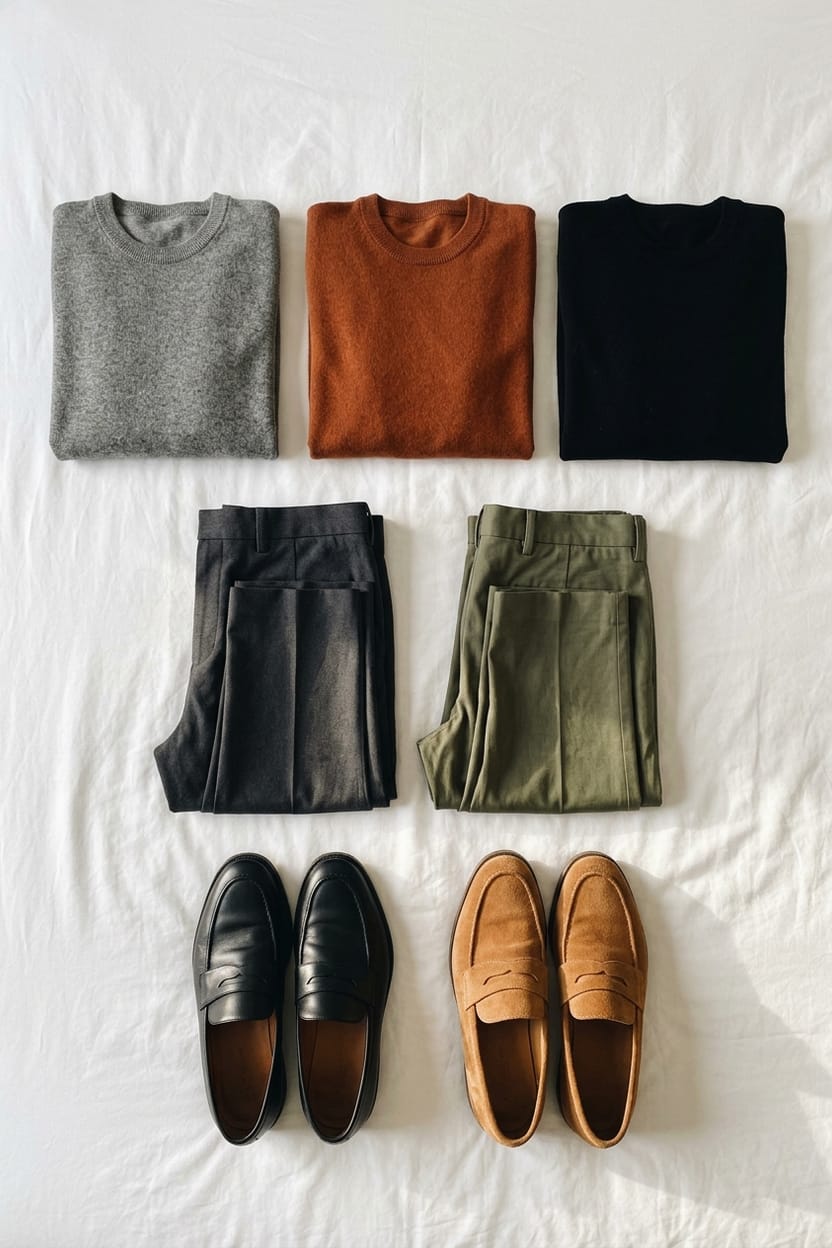
A formula names the types of pieces in an outfit, not the exact items. “Sweater + straight trousers + loafers” is a formula. “My grey merino sweater with my charcoal trousers and black loafers” is one outfit made from it.
The magic is that one formula makes many outfits. If you own three sweaters, two pairs of straight trousers and two pairs of loafers that all go together, that one formula gives you a dozen combinations.
Formulas work best in a capsule wardrobe, where your colors already mix. If you’re still choosing your colors, start with how to choose a capsule color palette.
Why formulas make dressing easier
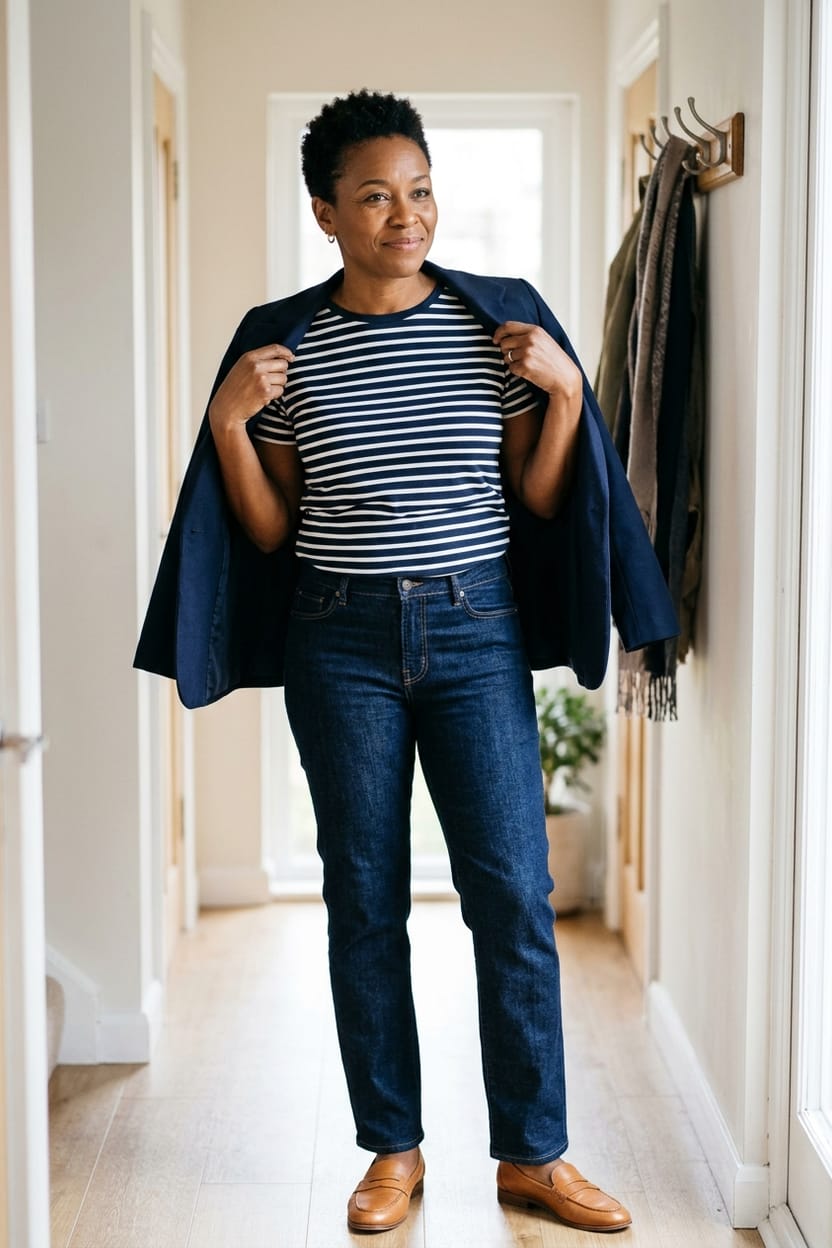
Most of us already dress by formula without noticing. Think of the outfit you put on when you have no time and want to look good. That outfit is your first formula.
Writing your formulas down helps in three ways:
- Faster mornings. You pick a formula, then fill it in from your closet.
- Better shopping. You only buy pieces that fit at least one of your formulas.
- A clearer personal style. Repeating shapes you love makes your outfits feel consistent.
The parts of a formula
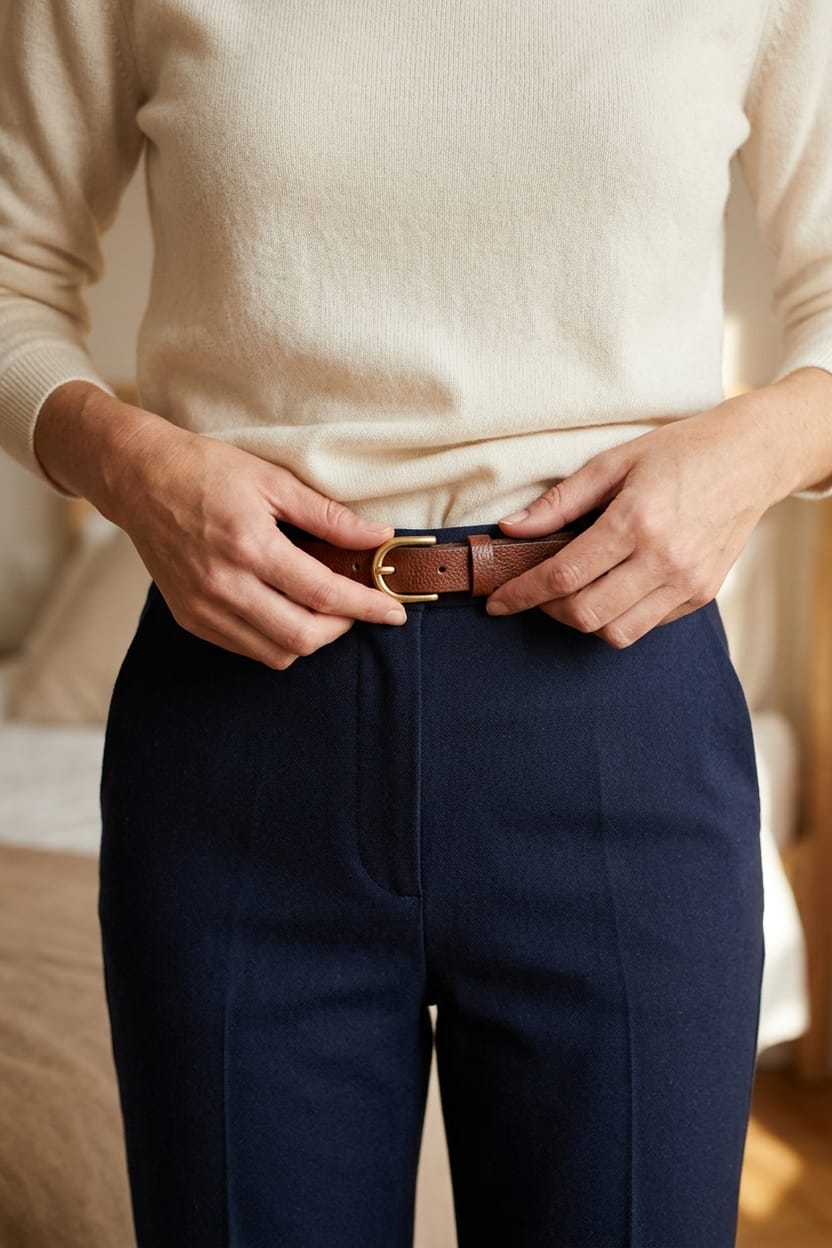
Most formulas are built from three or four parts. The finishing touch is optional, but it’s often what makes an outfit look deliberate.
| Part | Examples | Tip |
|---|---|---|
| Top | Tee, shirt, sweater, blouse, turtleneck | Decide whether it is tucked, half-tucked or loose |
| Bottom or dress | Jeans, tailored trousers, midi skirt, dress | The shape of the bottom sets the shape of the outfit |
| Layer | Cardigan, blazer, trench, coat | Optional indoors; part of the formula outdoors |
| Shoes | Sneakers, loafers, ankle boots, flats | Shoes change the mood more than any other part |
| Finishing touch | Belt, scarf, earrings, a bag | One finishing touch is enough |
How to find your own formulas
Step 1: Look at your favorite outfits
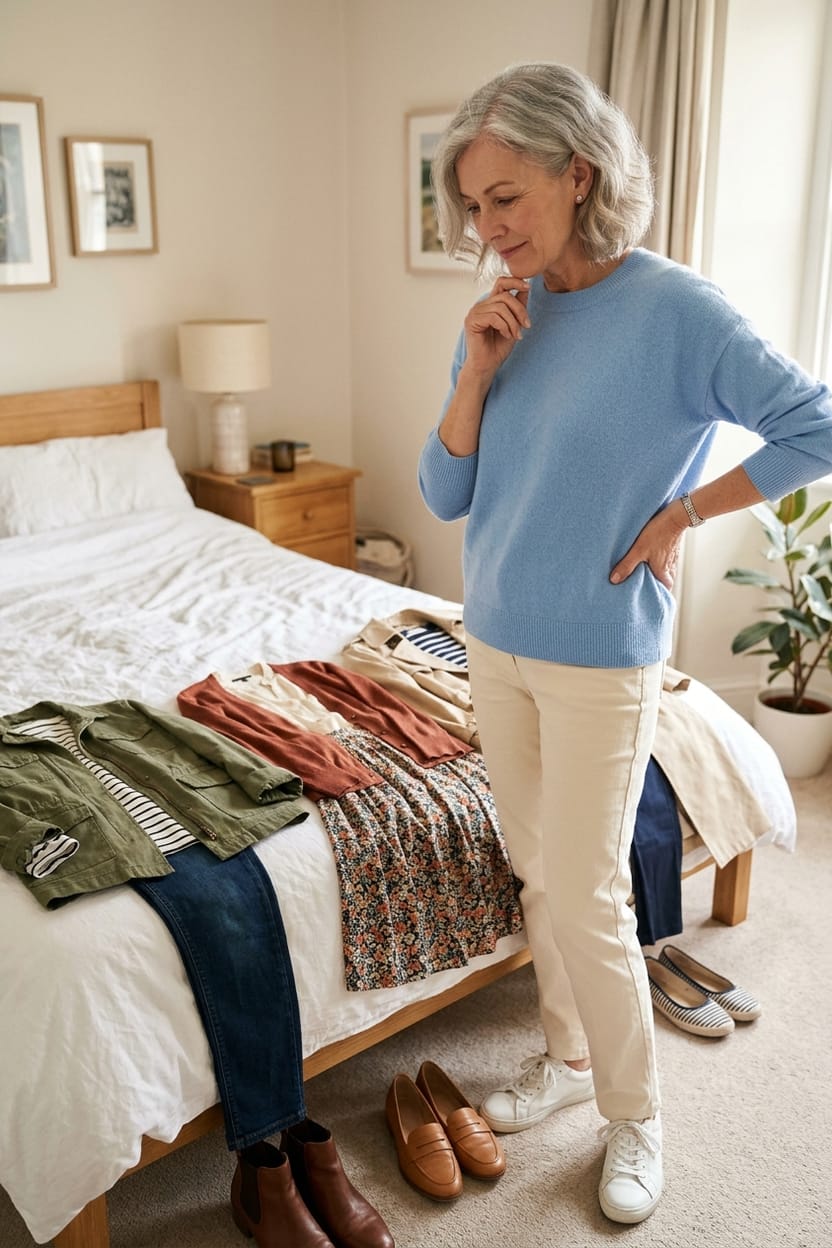
Think back over the last month and pick the five outfits you felt best in. If you can, lay them out on your bed or take a quick photo of each.
Look for what they have in common. Maybe you always wear something tucked in, or you reach for wide trousers, or every good outfit includes a layer.
Step 2: Write them as categories
Turn each outfit into a formula by replacing the exact pieces with their type. “Navy cardigan, white tee, dark jeans, white sneakers” becomes “cardigan + tee + jeans + sneakers”.
You will often find that several favorite outfits share the same formula. That’s a sign the formula really suits you.
Step 3: Test the formula with what you own
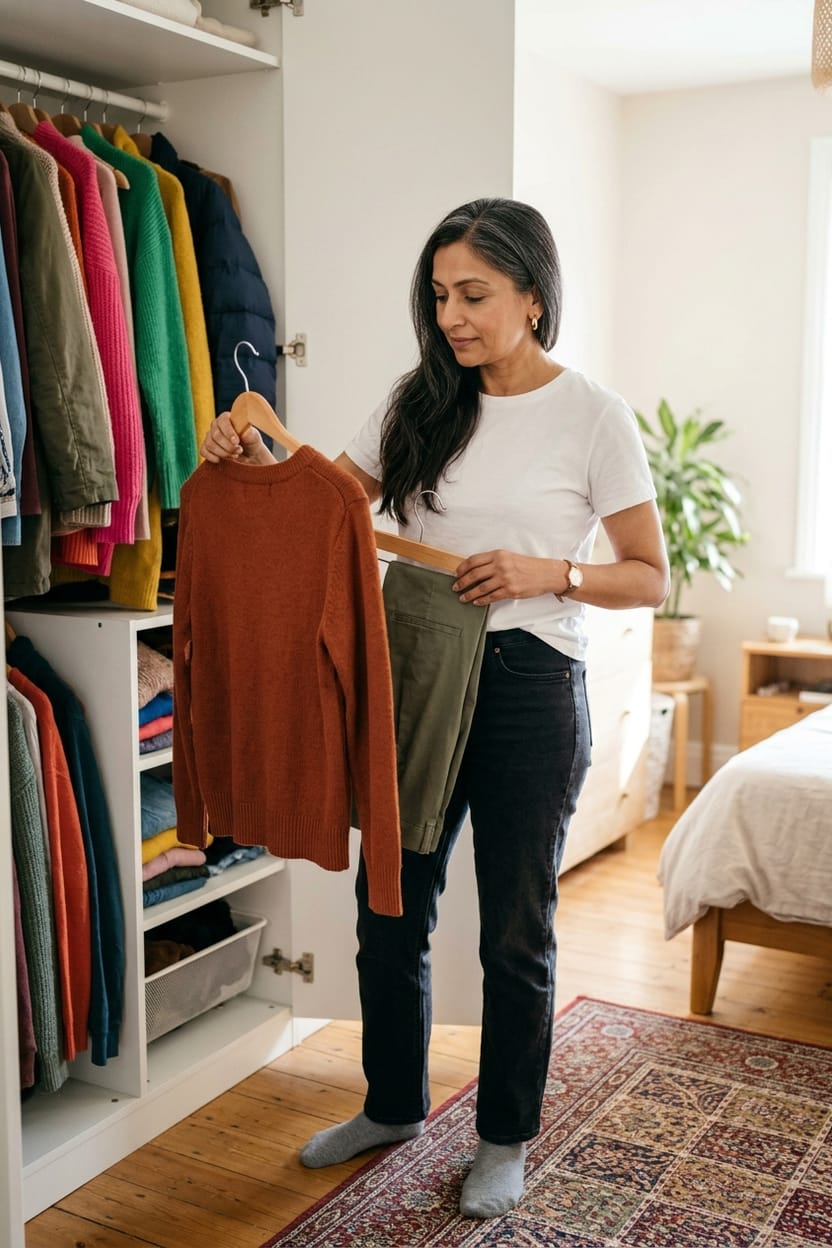
Pick one formula and make three outfits from it using only your closet. If you can, the formula works for your wardrobe. If you can’t, it shows exactly which piece is missing.
Step 4: Keep three to five formulas
You don’t need dozens. Three to five formulas, with one for work, one for weekends and one for going out, cover most weeks. You can add more as your wardrobe grows.
One formula, three ways
To see how much one formula can do, here is “sweater + straight trousers + loafers” worn three ways. Only the colors, fabrics and finishing touches change.
For a weekday

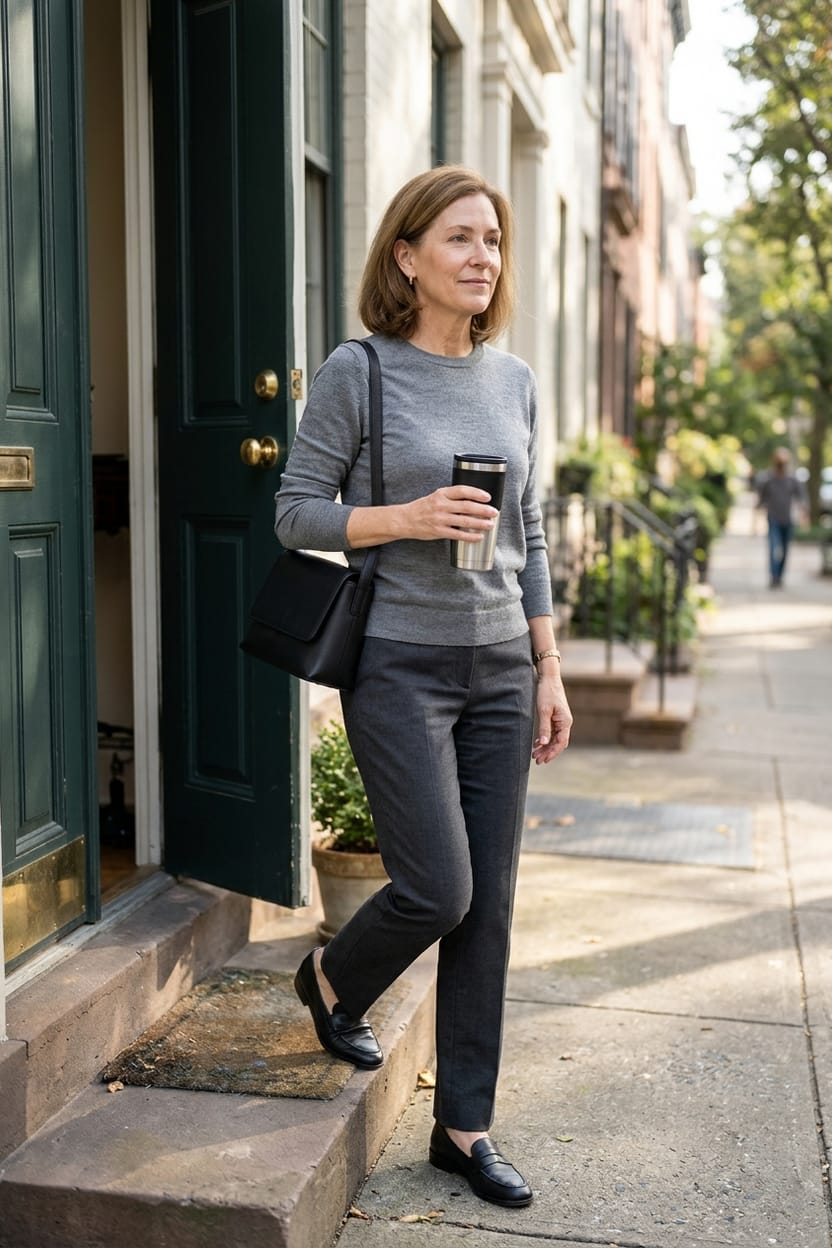
A grey merino sweater tucked into charcoal trousers, with black leather loafers and a structured bag. It’s calm, polished and works for an office, a meeting or appointments.
For the weekend

A rust sweater with olive chinos and suede loafers. Softer colors and textures make the same formula feel relaxed.
For an evening out
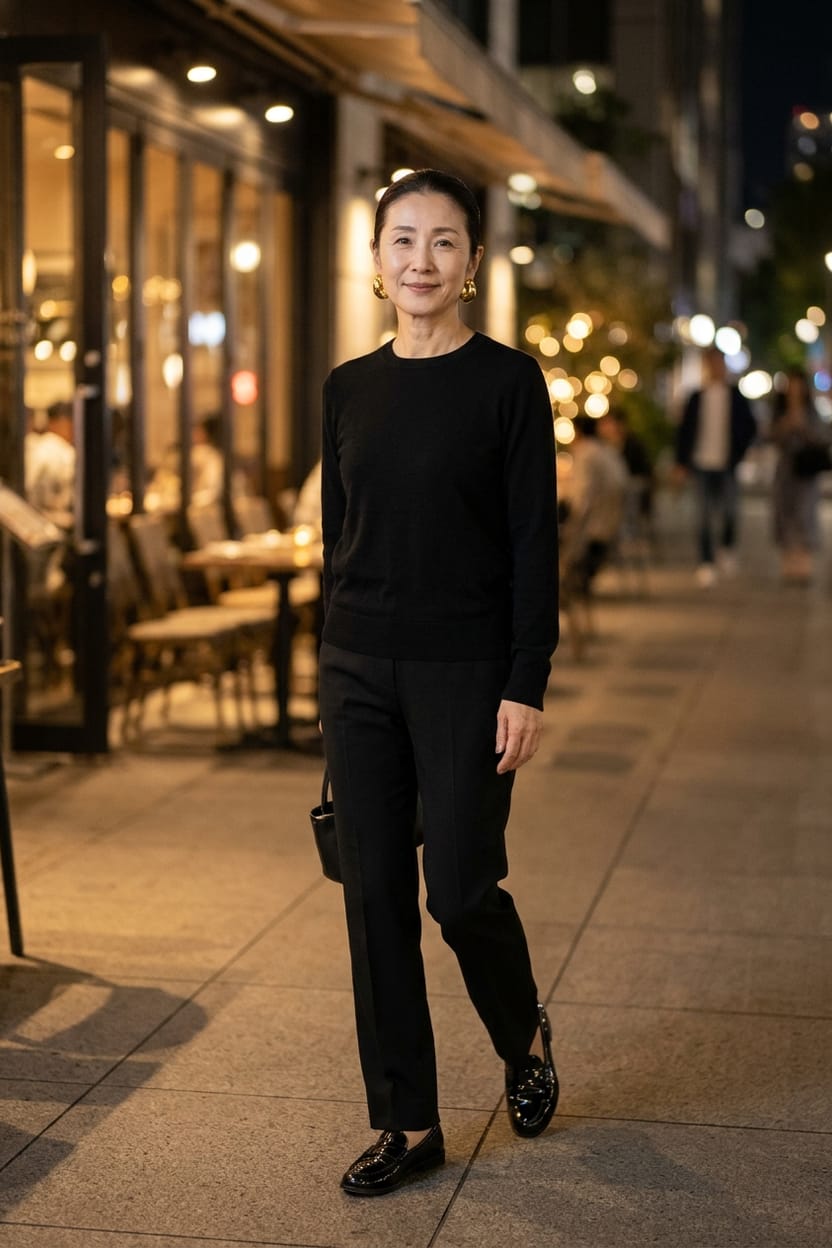
A black fine-knit sweater with black trousers, polished loafers and bold gold earrings. Head-to-toe black with one bright detail looks dressy without any effort.
Six formulas to start with
These six formulas suit most lifestyles and most capsule wardrobes. Try one this week. For more ideas, see 12 winter outfit formulas and casual winter outfit formulas.
1. Sweater + straight jeans + ankle boots
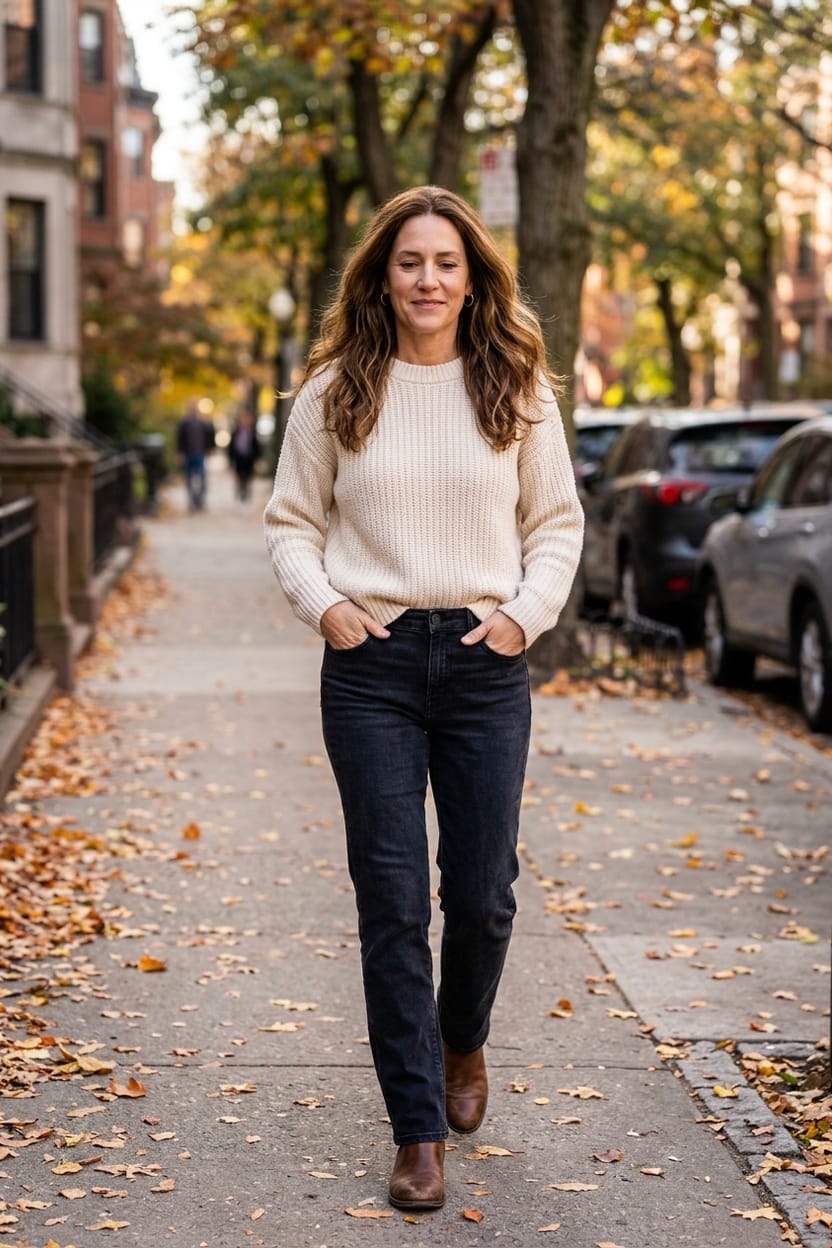
The most reliable cold-weather formula there is. Tuck the front of the sweater for a little shape, and make sure the jeans end at the top of the boots.
2. Shirt + tailored trousers + loafers

Smart, simple and comfortable. Roll the sleeves and leave the top buttons open for a relaxed version, or add a blazer for a meeting.
3. Tee + midi skirt + sneakers

An easy way to wear a skirt on an ordinary day. A plain tee tucked into the skirt keeps the outfit balanced.
4. Dress + cardigan + flats
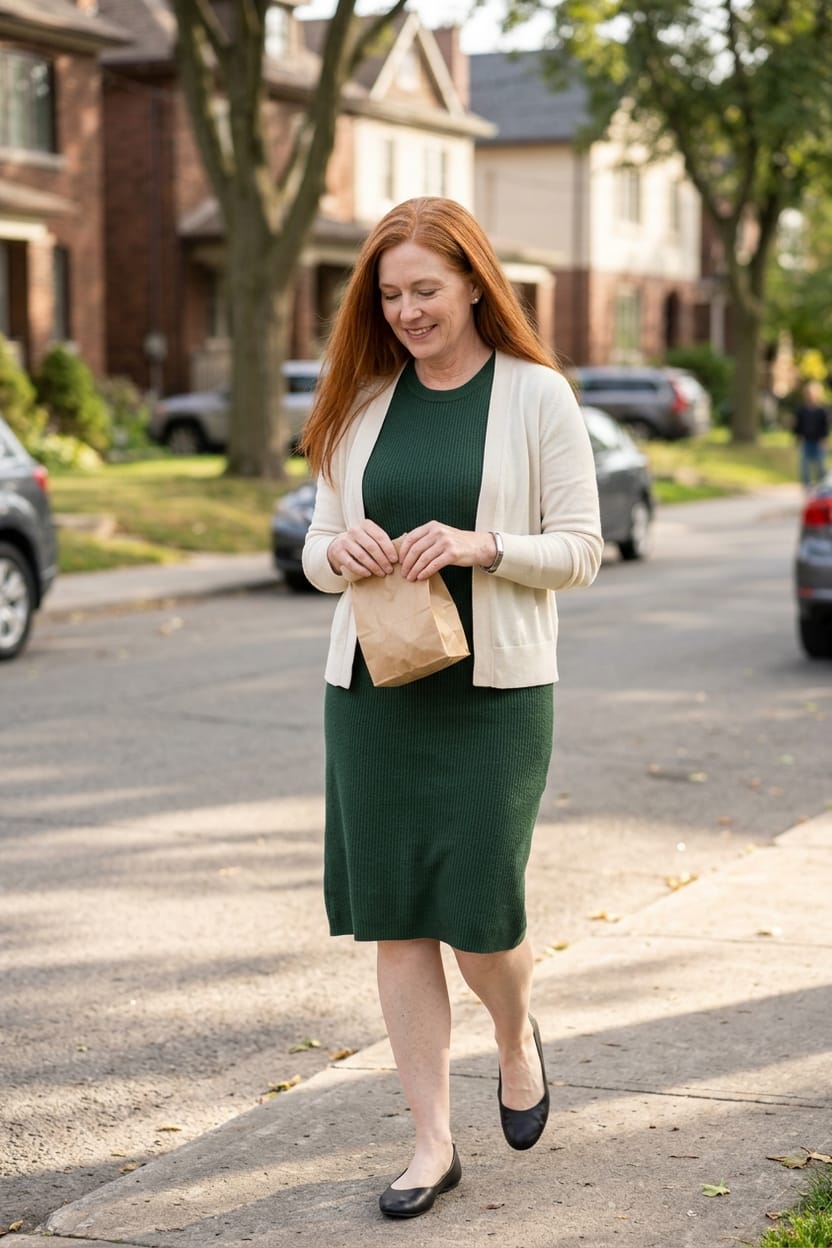
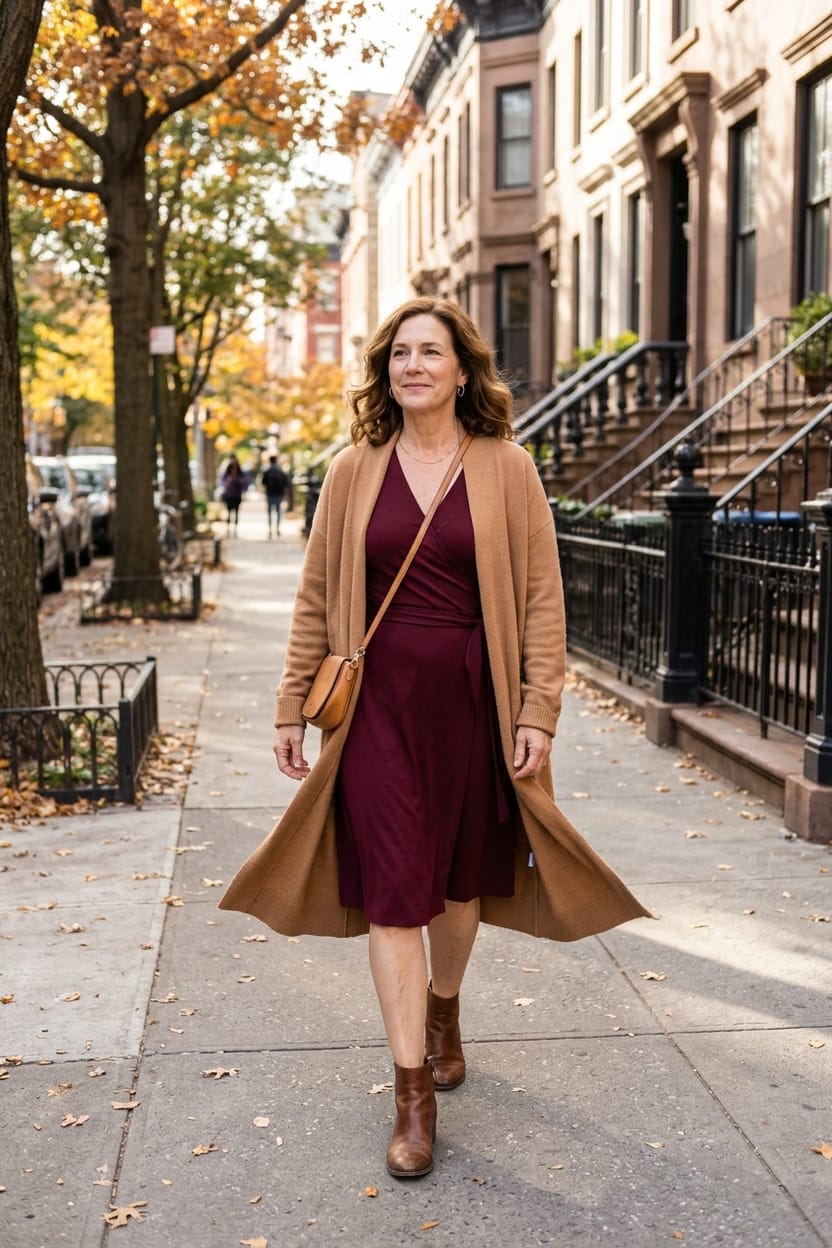
Comfortable enough for errands and polished enough for lunch out. Choose a cardigan that ends at the waist or one that reaches the hip, depending on the dress length.
5. Turtleneck + wide trousers + long coat
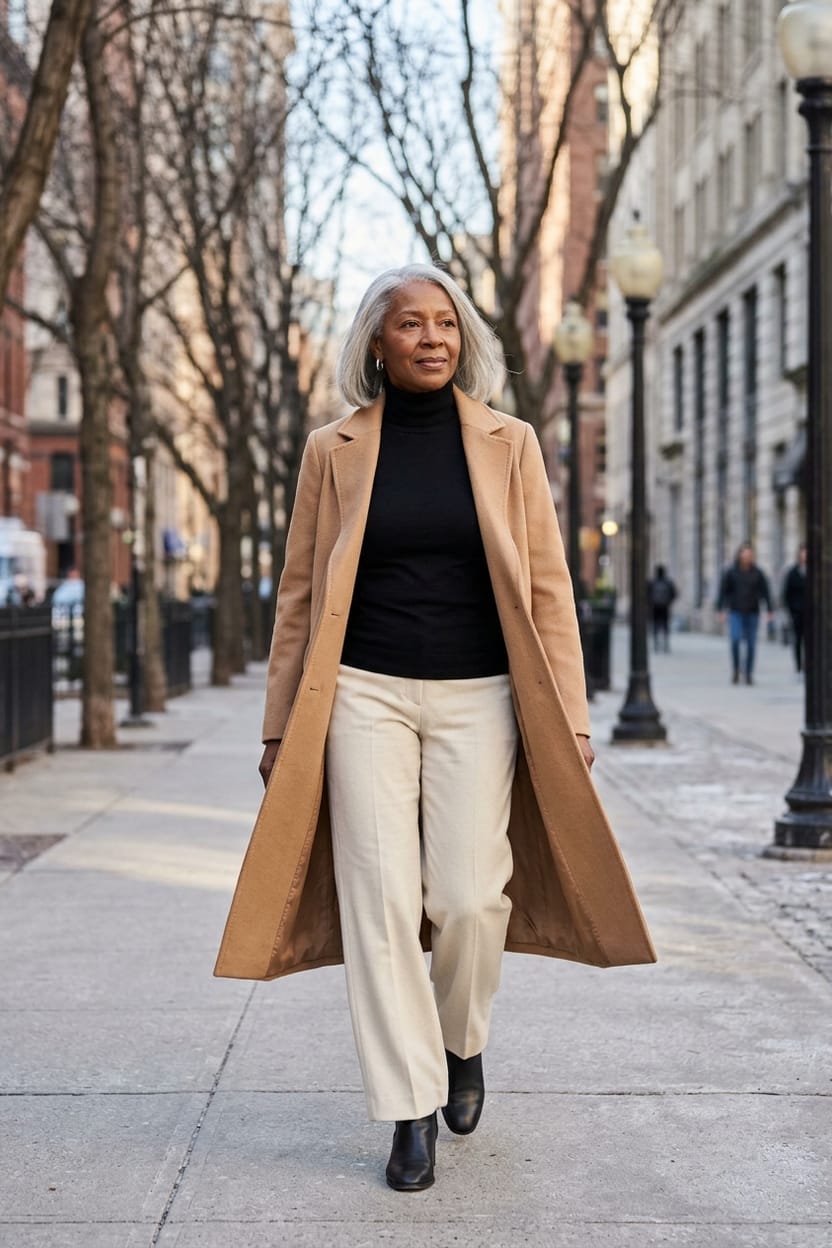
Elegant and warm. A fitted turtleneck balances the volume of wide trousers, and a long coat adds height.
6. Tee + blazer + jeans + loafers

The classic smart-casual formula. It works for lunch, travel, the office on a casual day and most evenings out.
Adapting formulas for seasons and occasions

A formula doesn’t stop working when the weather changes. Swap each part for its lighter, warmer or dressier version.
| Formula | Warmer weather | Colder weather | Dressier |
|---|---|---|---|
| Sweater + jeans + boots | Fine cotton knit, light jeans, sneakers | Chunky knit, dark jeans, lined boots | Cashmere, dark jeans, heeled boots |
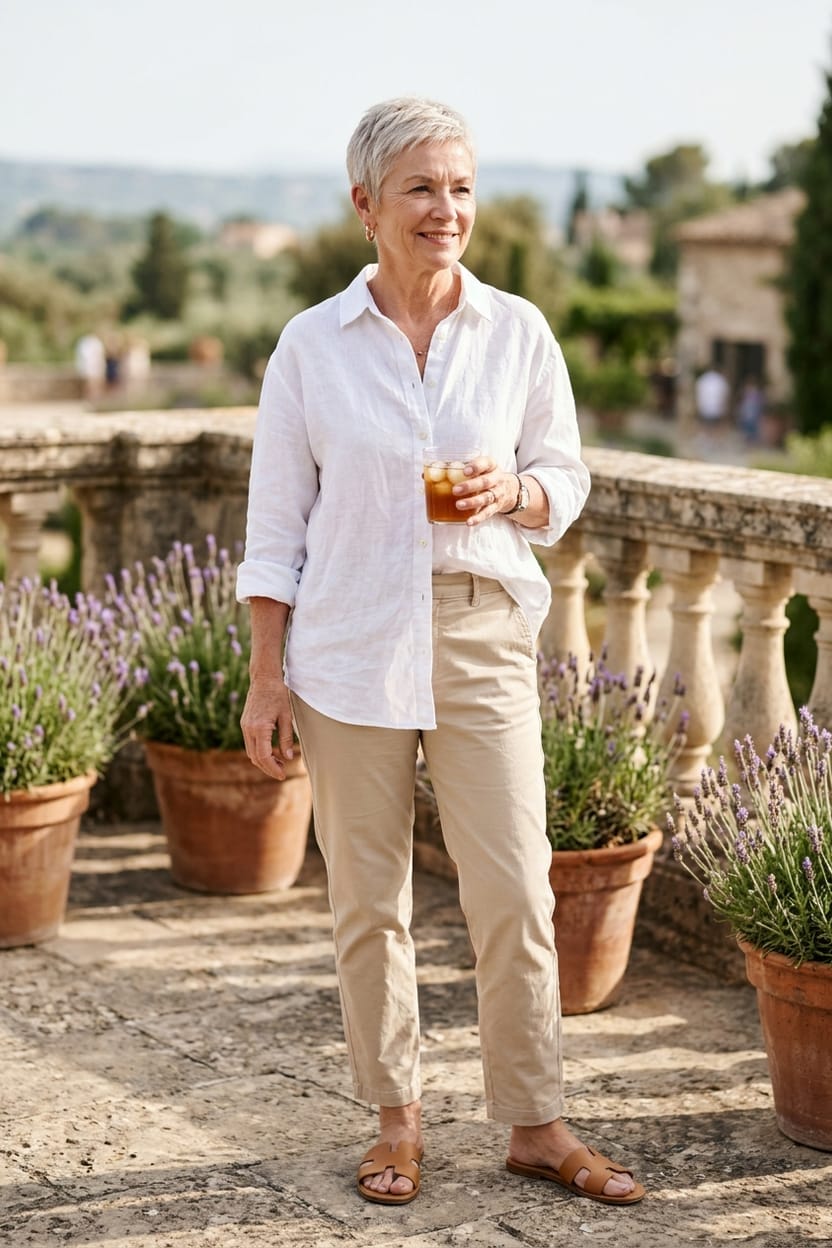
| Shirt + trousers + loafers | Linen shirt, cotton trousers, sandals | Shirt under a sweater, wool trousers | Silk blouse, crepe trousers, polished loafers |
| Tee + skirt + sneakers | Linen skirt, sandals | Knit skirt, tights, ankle boots | Silky skirt, fine knit, heeled boots |
| Dress + cardigan + flats | Cotton dress, light cardigan, sandals | Knit dress, tights, long cardigan, boots | Smooth dress, cropped jacket, heels |
Styling tip: when you adapt a formula, change only one or two parts at a time. The outfit still feels like you, and you won’t need many new pieces.
Common formula mistakes
Using formulas that don’t suit your life

A formula built around tailored trousers isn’t much help if you spend most days gardening or chasing grandchildren. Start with the days you actually live, then add formulas for special occasions.
Repeating the formula, but not the colors
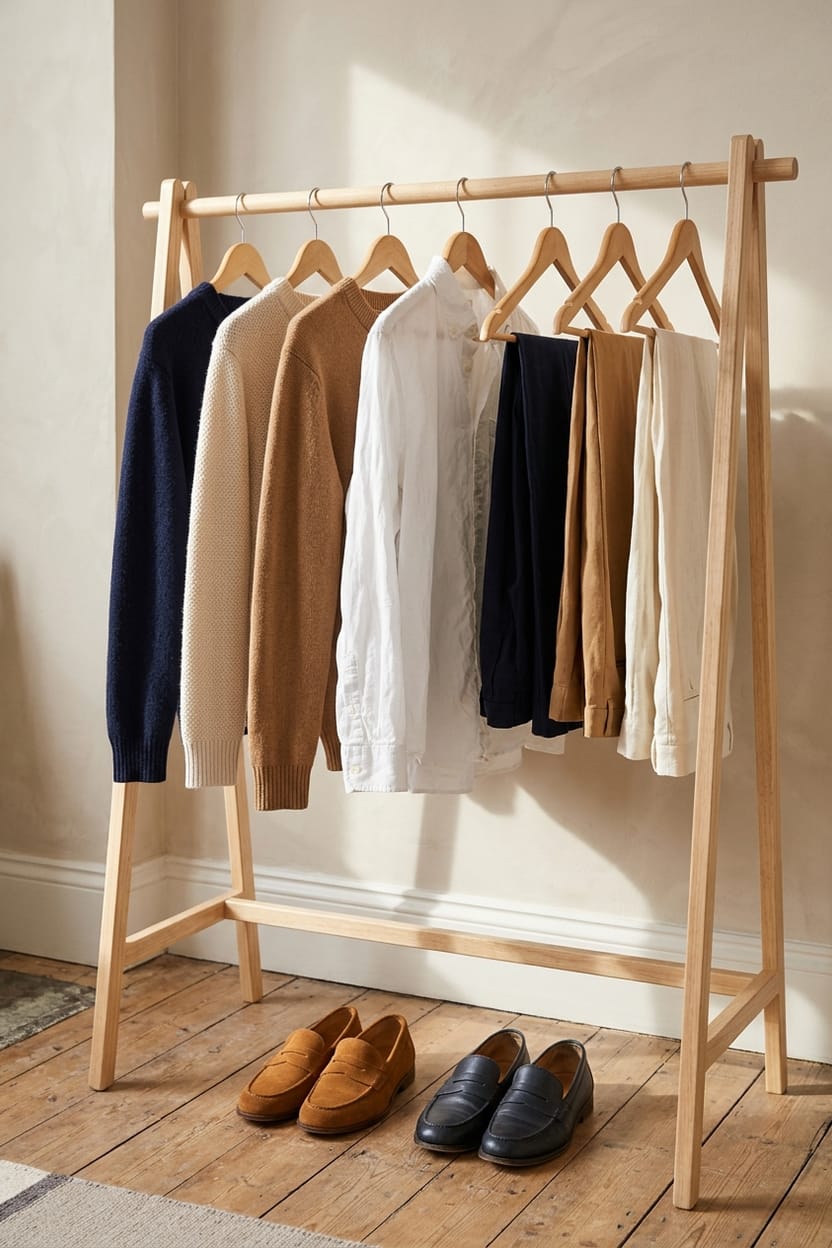
A formula only works if the pieces go together. If your sweaters don’t match your trousers, the formula breaks down. Keeping to a small set of colors fixes this.
Frequently asked questions

What is an outfit formula?
An outfit formula is a recipe for an outfit that names the types of pieces rather than specific items, such as “sweater + straight trousers + loafers”. You fill it in with whatever pieces you own in those categories.
How many outfit formulas do I need?
Three to five is enough for most women: one or two for everyday, one for work or appointments and one for going out. You can add more as your wardrobe grows.
Do outfit formulas get boring?
Not if you change the colors, fabrics and finishing touches. The same formula can look completely different in navy wool, cream cotton or black silk.
Can I use outfit formulas without a capsule wardrobe?
Yes. Formulas work with any closet. A capsule just makes them easier, because more of your pieces go together.
What is the easiest outfit formula to start with?
Sweater or tee + straight jeans + a comfortable shoe you love. Most women already own the pieces, and it works for a wide range of days.