How to Choose a Capsule Wardrobe Color Palette That Works
Choose a capsule wardrobe color palette in six simple steps, with six ready-made palettes, a face test for undertones and how to add prints.
Photos on this page are AI-generated. They show outfit ideas, not real customers or the exact products linked.
A capsule wardrobe only works if the pieces go together, and color is what makes that happen. When your tops, bottoms and layers share a small set of colors, you can pull almost any two pieces from the closet and have an outfit.
This guide walks you through choosing a palette in six steps. Then you’ll find six ready-made palettes to copy, plus how to fit in prints, one-color outfits and seasonal changes.
Step 1: Start with what you already wear

Before you think about new colors, look at what you actually reach for. Open your closet and pull out the pieces you wore most in the last month.
You will usually notice two or three colors repeating. Those are your real neutrals, even if you never planned them. A palette built on them costs less, because you already own the base.
Also notice the colors you keep buying but rarely wear. They often look lovely in the shop and then match nothing at home. Leave them out of your palette for now.
Step 2: Choose one main dark neutral
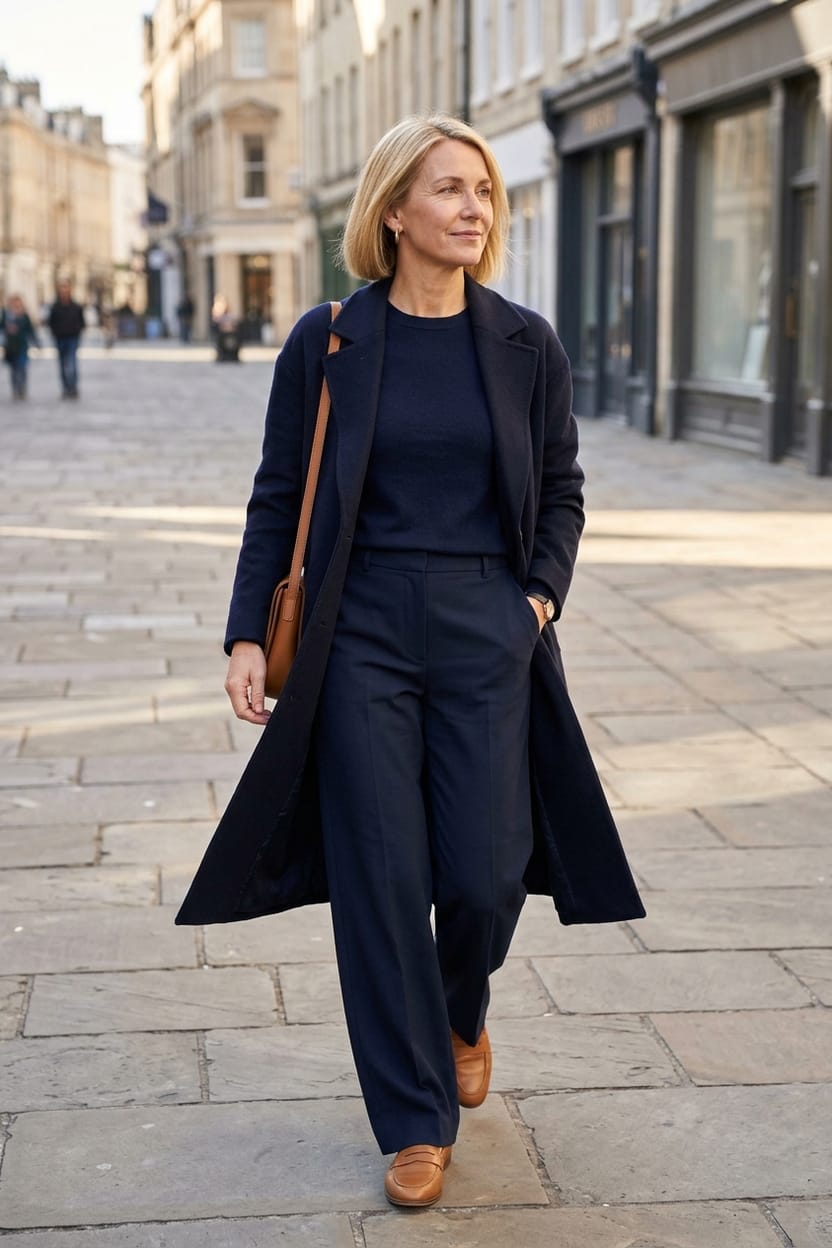
Your dark neutral does the heavy lifting: trousers, jeans, coats, shoes and bags. Pick one and let it lead. Mixing navy and black in the same outfit is fine, but choosing one as your main color makes shopping much easier.
| Dark neutral | Easy partners | Good choice if you |
|---|---|---|
| Navy | Cream, white, camel, rust, red | Want something softer than black that still looks smart |
| Charcoal | White, burgundy, pale pink, blue | Like a polished, city look |
| Black | Ivory, white, emerald, red, leopard | Already own a lot of black and like strong contrast |
| Chocolate brown | Camel, cream, olive, turquoise | Love warm, earthy colors |
| Olive | Cream, denim blue, rust, tan | Dress mostly casually |
Styling tip: buy your shoes and everyday bag in your dark neutral, or in a brown or tan that suits it. It ties every outfit together without thought.
Step 3: Add a light neutral
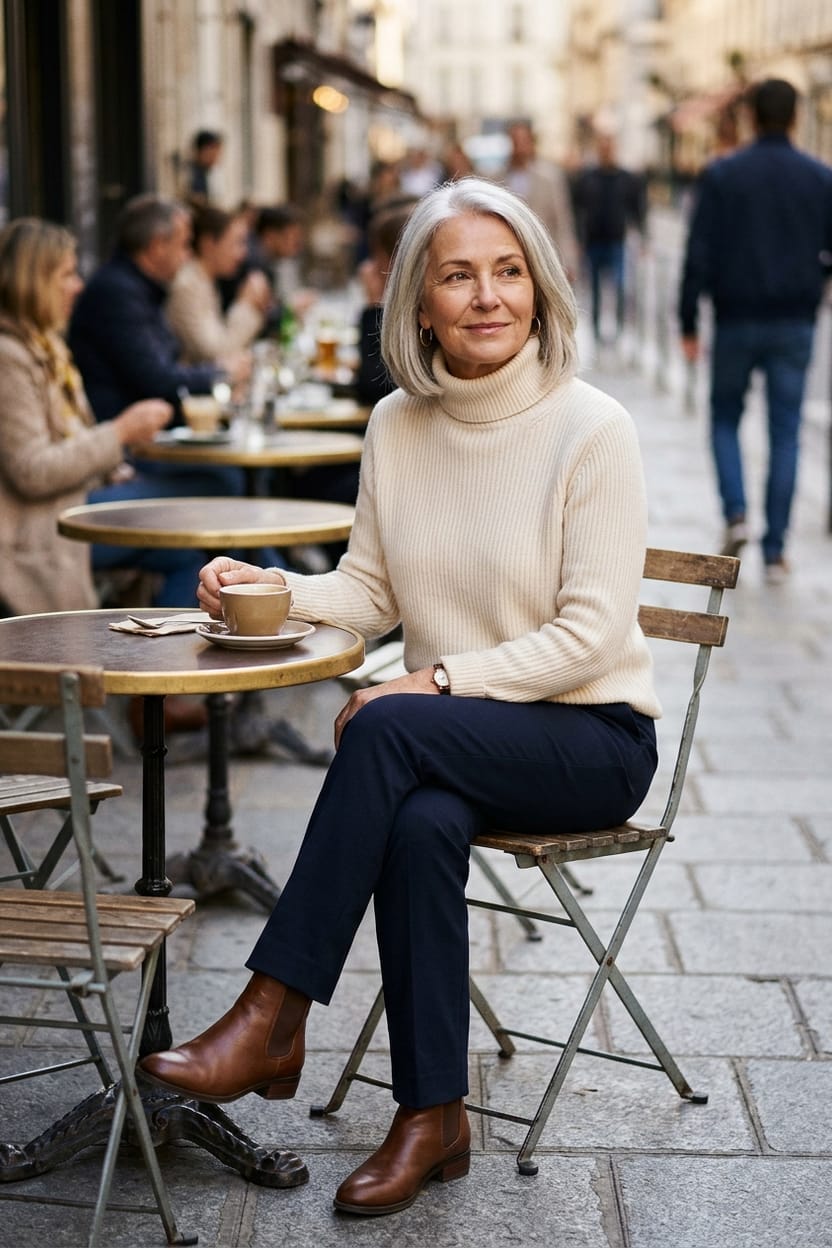
Your light neutral goes near your face: tees, shirts, sweaters and scarves. Cream, ivory, soft white, light grey, oatmeal and camel all work.
Choose the light neutral that looks best against your skin. This matters more than the dark neutral, because it sits right below your face in most outfits.
Styling tip: a light neutral sweater with dark neutral trousers is the most reliable outfit in any capsule. If that combination looks good, you’re on the right track.
Step 4: Choose one or two accent colors

Accents are what make a neutral wardrobe feel like yours. Start with one. Add a second only after you’re wearing the first regularly.
The easiest way to find your accent is to look at what you already love: the color of your favorite scarf, a sweater that always gets compliments, or the shade you keep stopping at in shops.
Use your accent in pieces that are easy to swap: a sweater, a scarf, a top or a pair of flats. Keep large pieces such as coats and trousers in neutrals so they work with everything.
Step 5: Test colors near your face

Some colors make your skin look fresh and some make it look tired. You don’t need a color analysis to find out which. Stand by a window in daylight with a mirror, and hold each color under your chin.
| What you notice | What it suggests | Colors to try |
|---|---|---|
| Cream and gold jewelry look better than bright white and silver | Your coloring may lean warm | Rust, olive, camel, warm red, teal |
| Bright white and silver look better than cream and gold | Your coloring may lean cool | Burgundy, navy, emerald, berry, icy pink |
| Both look fine | You can wear a wide range | Pick by preference |
| A color makes shadows under your eyes look darker | That shade isn’t helping you near your face | Wear it on the bottom half instead |
Hair color changes over time, and so can the colors that suit you. If you have gone grey or silver, test again. Shades that looked flat before may suddenly look great.
Step 6: Test the palette with three outfits
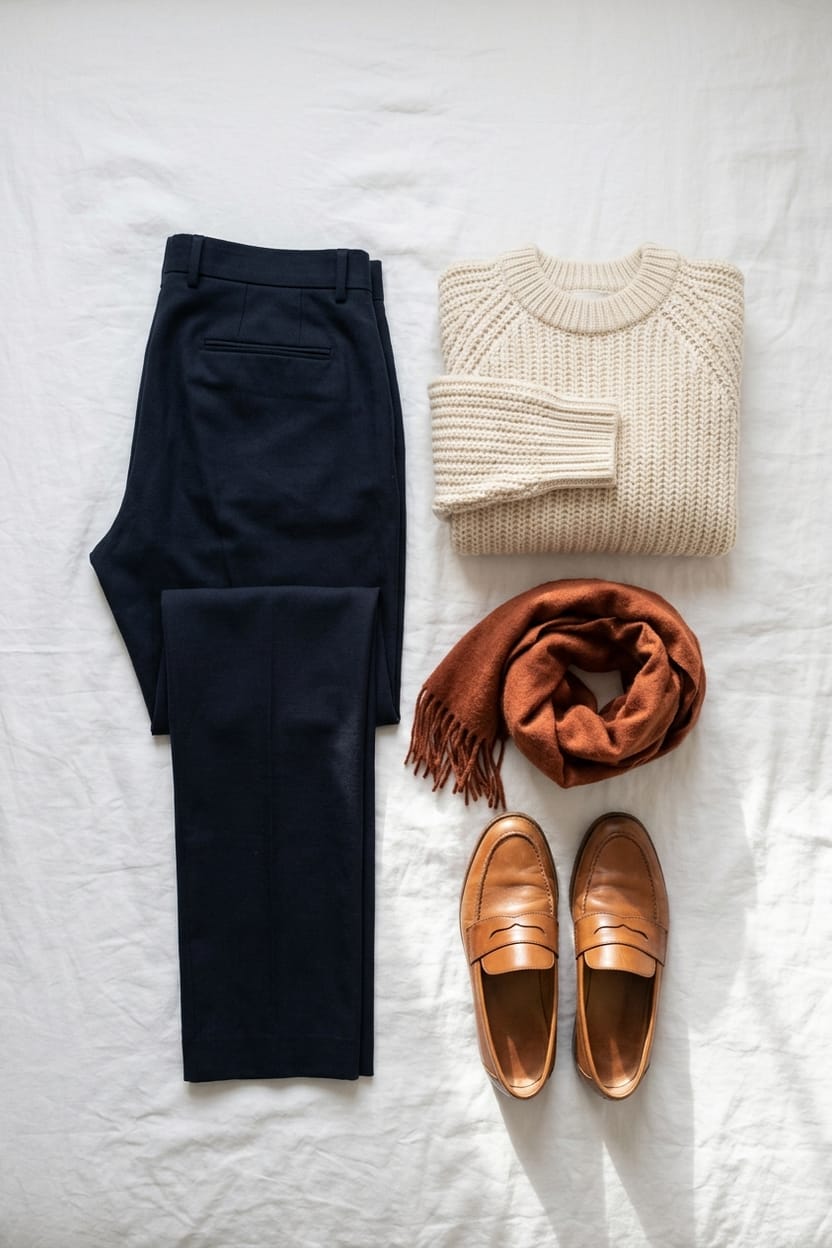
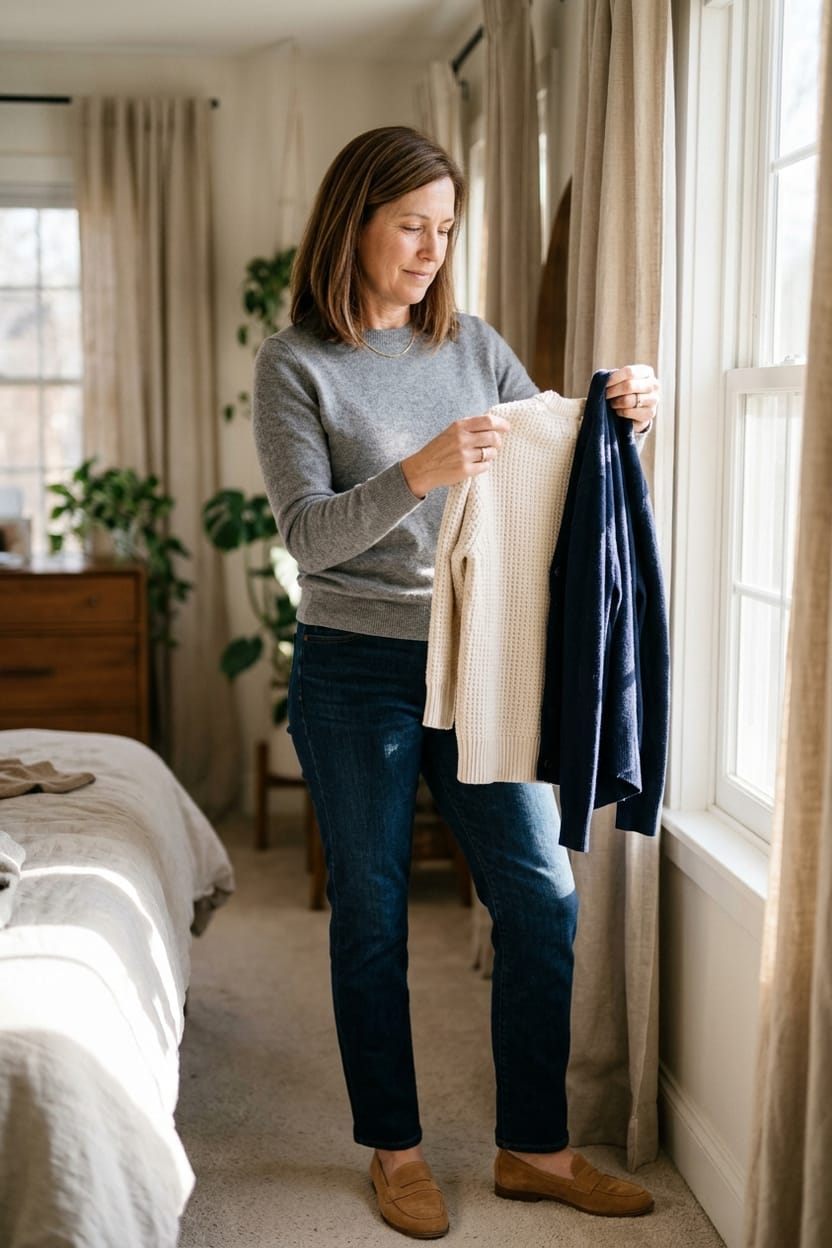
Lay out a top, a bottom and a layer in your colors on your bed. Make three different outfits this way. If each one looks right without fussing, your palette works.
If one combination looks off, it’s usually the accent. Try a softer or deeper version of the same color before giving up on it.
Six ready-made capsule palettes
Each of these uses one dark neutral, one light neutral and one accent. Copy one exactly or swap in a color you prefer.
Navy, cream and rust

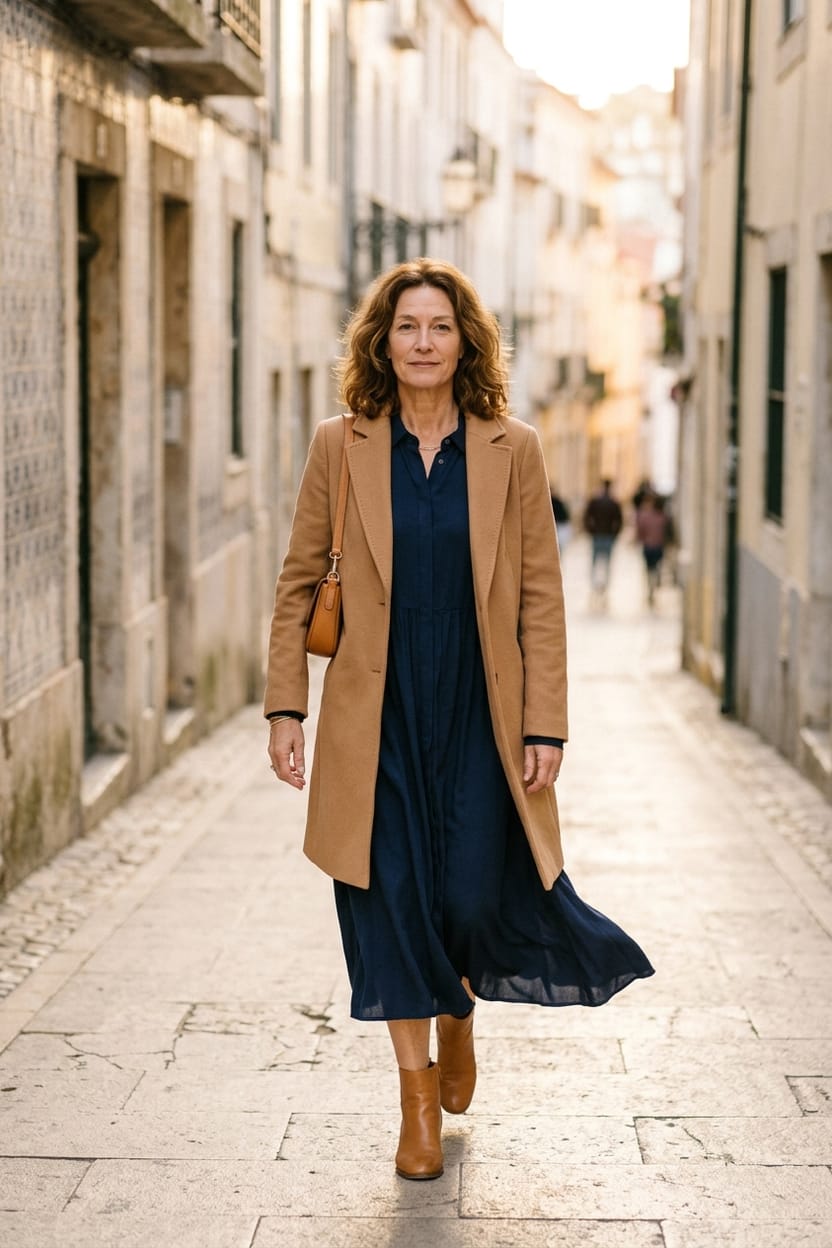
Warm and classic. Navy trousers and a cream sweater are calm on their own; a rust scarf or top makes them feel finished. This palette suits almost everyone and looks good in every season.
Charcoal, white and burgundy

Crisp and polished, with a little richness. Good for women who work in an office or simply like a sharper look. Burgundy is easier to wear than bright red and works well in fall and winter.
Black, ivory and emerald
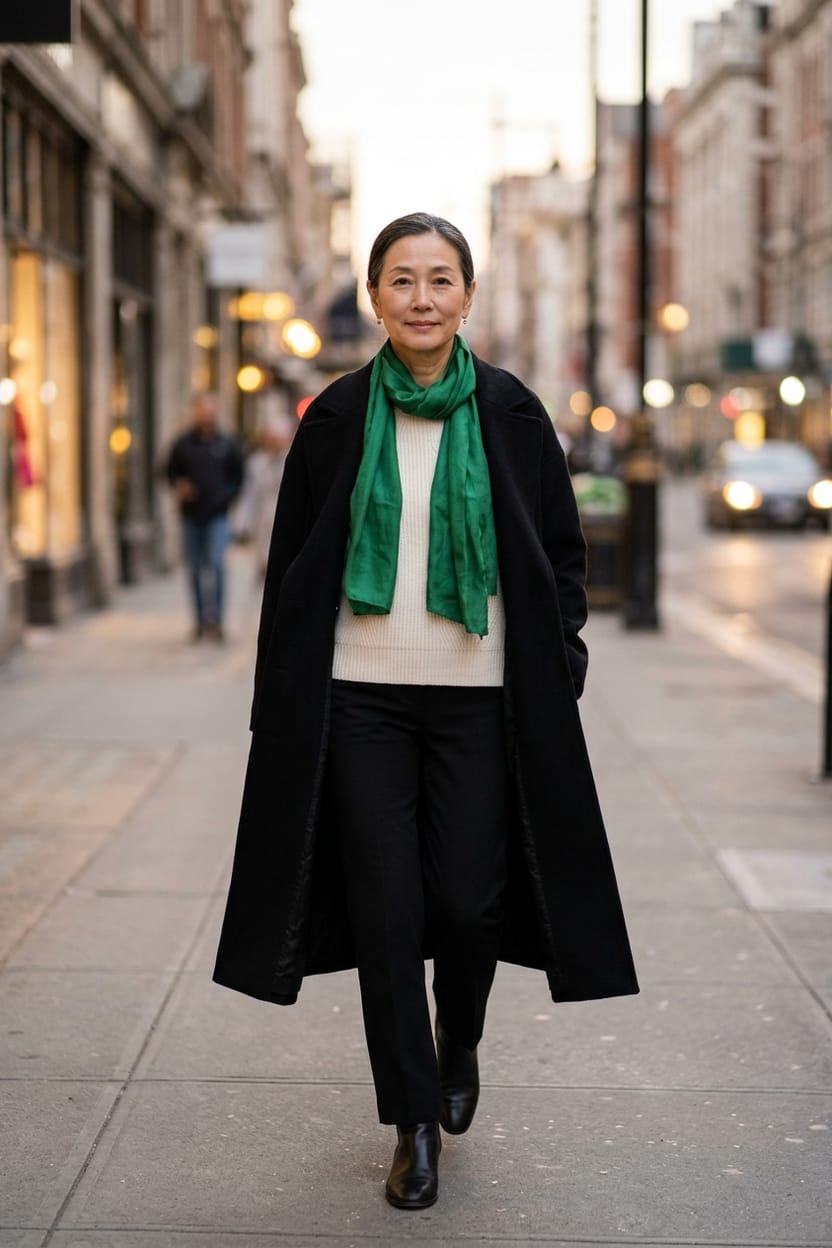
Bold and elegant. If your closet is already full of black, add ivory instead of bright white for a softer look near your face. Emerald adds color without breaking the calm of the palette.
Chocolate brown, camel and olive
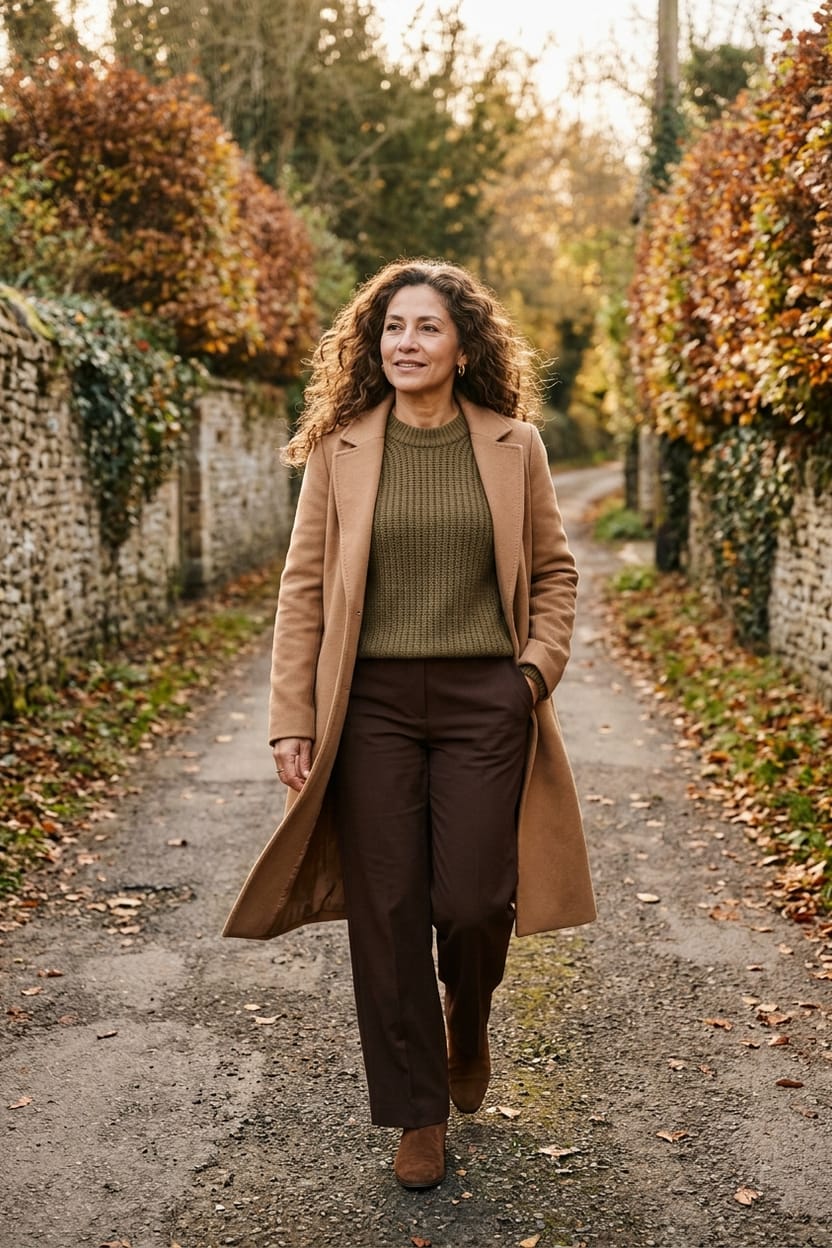
Soft and earthy. Brown is a warmer alternative to black, and it looks especially good with cream knits and tan leather. Olive keeps the palette casual and easy.
Grey, soft white and dusty pink

Light and gentle. Grey is easy to mix, and dusty pink adds warmth without looking sweet. A good choice for silver hair, which tends to look lovely against soft grey and pink.
Camel, black and white
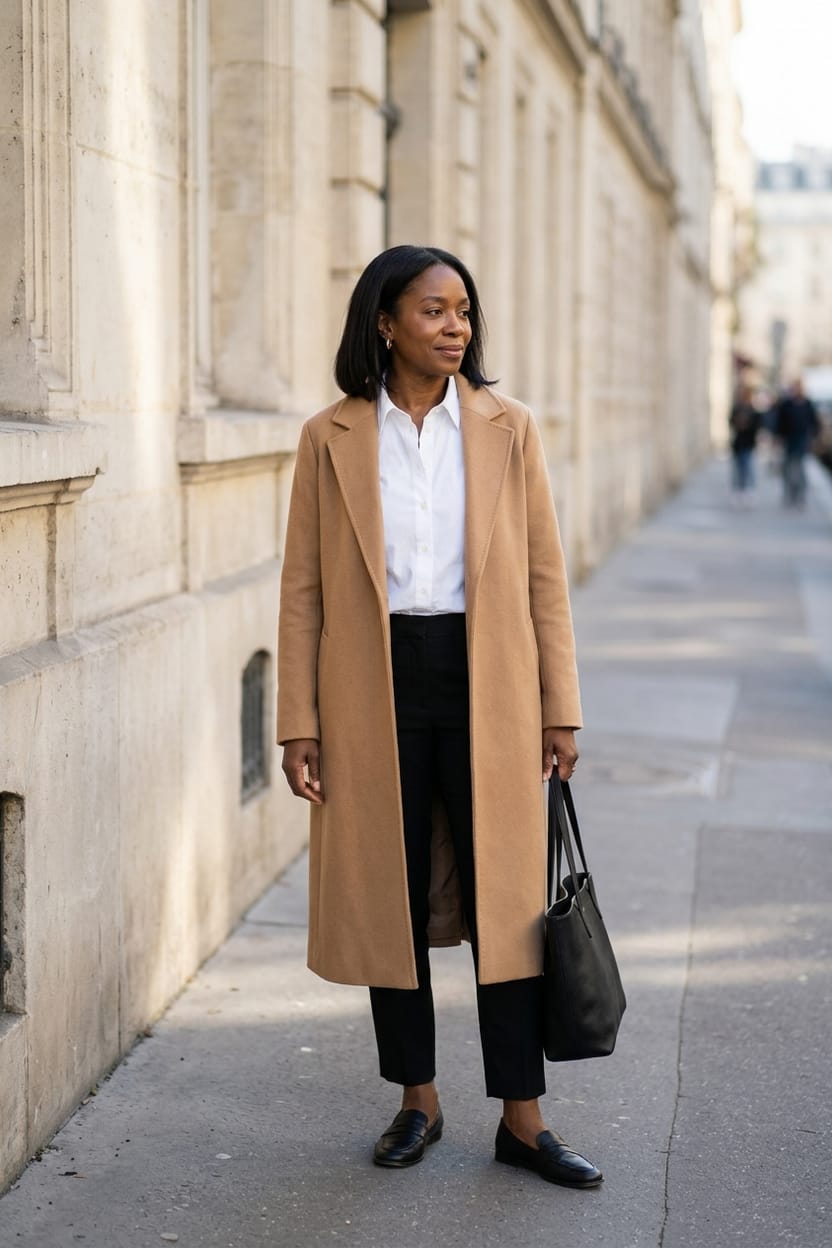
The simplest classic. Camel coats and knits with black trousers and white shirts never look dated. Add a red lip or a striped top if you want a little more life.
How to add prints

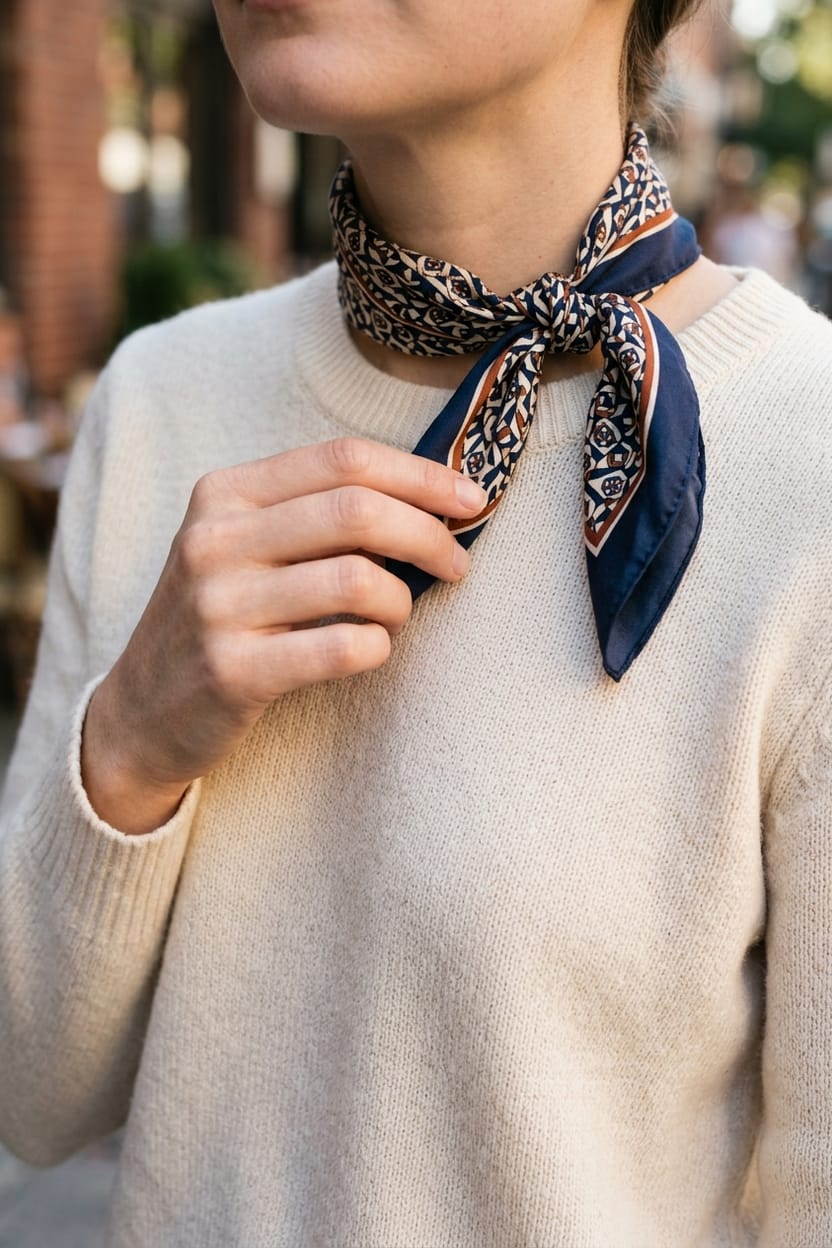
Prints fit into a capsule when they share your colors. Before you buy a printed piece, check that it contains at least one of your neutrals, and ideally your accent too.
Wear prints with plain pieces. A floral skirt looks best with a solid sweater in one of the colors from the print. Stripes, small checks and polka dots in your neutrals are the easiest prints to start with, because they behave almost like a solid.
Styling tip: a printed scarf in your palette lets you try a pattern near your face without committing to a whole top.
One-color outfits

Wearing one color from head to toe looks calm and expensive, and it’s an easy way to use your palette. Camel, cream, grey and navy all work well.
The trick is to vary the texture. Pair a chunky knit with smooth trousers, or a wool coat with a silky top. Without texture, a one-color outfit can look flat.
Changing your palette with the seasons

You don’t need a new palette each season. Keep your neutrals and shift the accent, or lighten and darken the same colors.
| Palette | Spring and summer | Fall and winter |
|---|---|---|
| Navy, cream, rust | Light denim, white, coral | Navy, cream, rust |
| Charcoal, white, burgundy | Light grey, white, raspberry | Charcoal, ivory, burgundy |
| Black, ivory, emerald | Black, white, jade | Black, ivory, emerald |
| Brown, camel, olive | Tan, sand, sage | Chocolate, camel, olive |
| Grey, soft white, dusty pink | Pale grey, white, blush | Charcoal, oatmeal, dusty rose |
Your coat, boots and bag can stay the same all year. Only the pieces closest to your skin need to change.

Palette mistakes to avoid
Too many accent colors
Three or four accents quickly turn into a closet where nothing matches. Start with one. If you find yourself wanting another, choose one that works with the first.
Forgetting shoes and bags
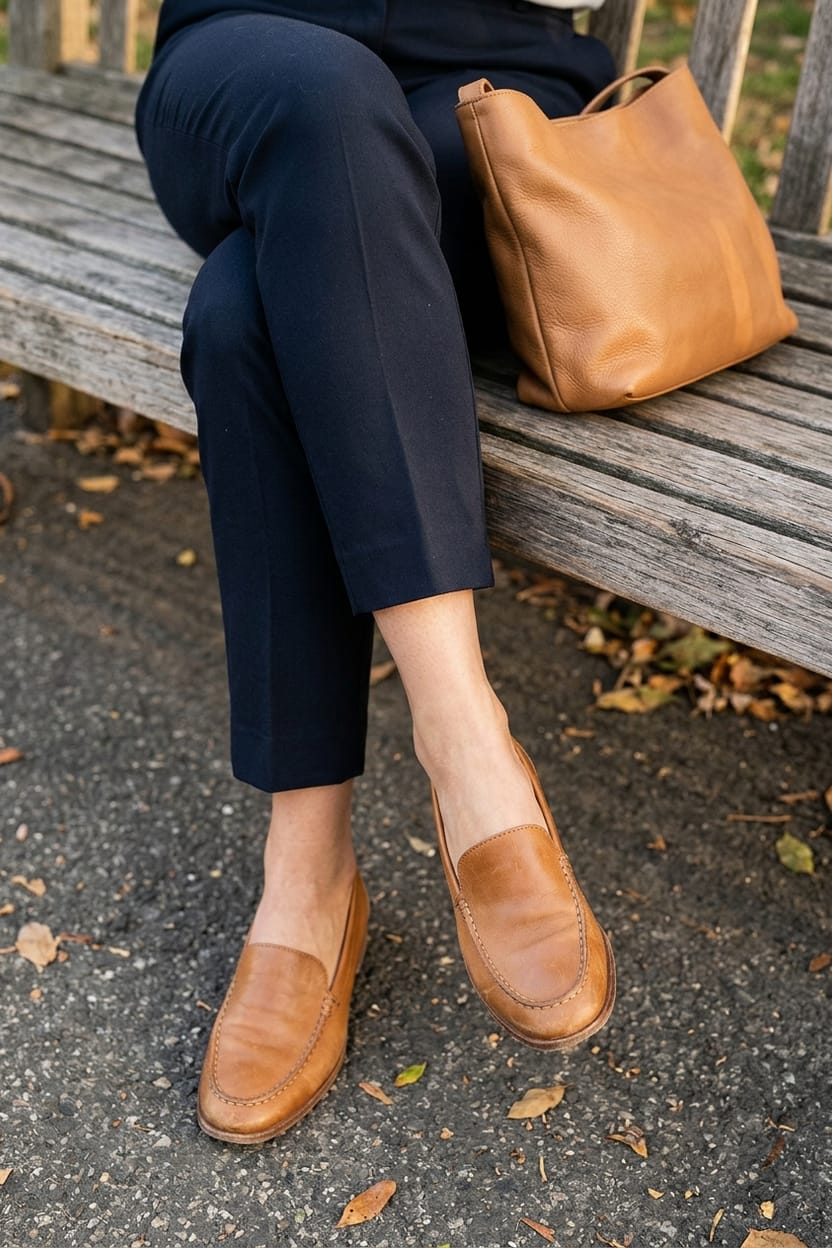
Shoes and bags appear in every outfit, so they need to fit the palette too. One pair in your dark neutral and one in tan or white covers most outfits.
Choosing colors for someone else

A palette copied from a magazine won’t feel right if you never wear those colors. Use the ready-made palettes as a starting point, then adjust them to what you really reach for.
Frequently asked questions
How many colors should a capsule wardrobe have?
Three to five is easiest: one dark neutral, one or two light neutrals and one or two accents. Fewer colors means more pieces go together.
Can I have both black and navy in my capsule?
Yes, but choose one as your main dark neutral and keep the other for a few pieces. Many women wear navy trousers with black shoes, or a black coat over navy, and it looks deliberate when done on purpose.
What are the best neutral colors for women over 50?
The ones that look good against your skin and hair today. Many women find softer neutrals such as cream, ivory, navy, grey and camel more flattering near the face than stark white or black, but test them in daylight to be sure.
Do I have to give up colors that aren’t in my palette?
No. Keep anything you love and wear. The palette is a guide for new purchases, so your closet slowly becomes easier to mix.
How do I know if a new piece fits my palette?
Hold it against three things you already own: a top, a bottom and a layer. If it works with all three, it fits. If it only works with one, skip it.
For the pieces to fill your palette with, see the capsule wardrobe checklist.