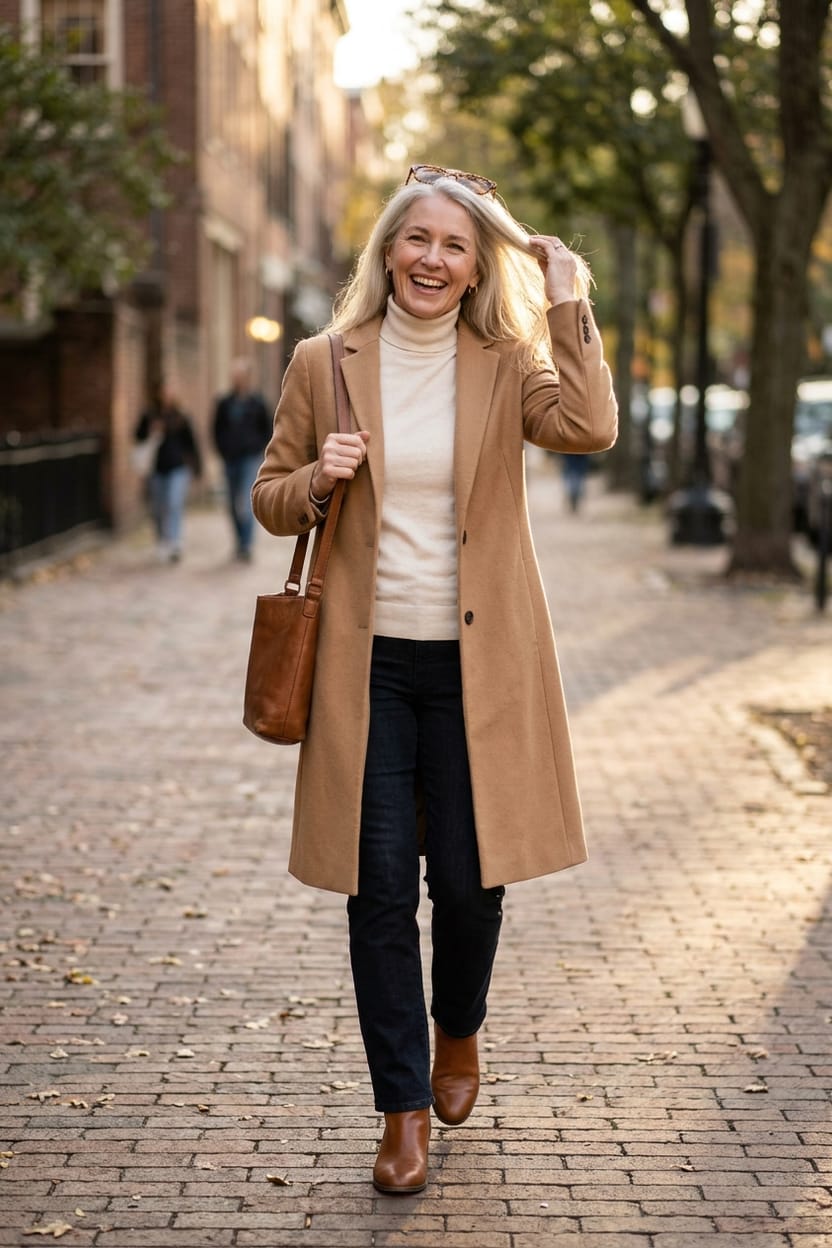
How to Layer a Capsule Wardrobe for Cold Weather
Learn a simple three-layer system for cold weather, what each layer does, and how to stay warm outdoors without overheating inside.

Photos on this page are AI-generated. They show outfit ideas, not real customers or the exact products linked.
Layering lets you use fewer clothes across more temperatures. Instead of owning a separate outfit for every kind of weather, you add or remove one piece. The system has three simple layers, each with its own job.
The three-layer system
| Layer | Its job | Examples |
|---|---|---|
| Base | Sits next to your skin | Tee, long-sleeve top, thermal top |
| Middle | Holds warmth | Sweater, cardigan, fleece |
| Outer | Blocks wind and wet | Coat, parka, raincoat |
Not every day needs all three. A mild day may only need a base and an outer layer.
Step 1: Choose a thin base
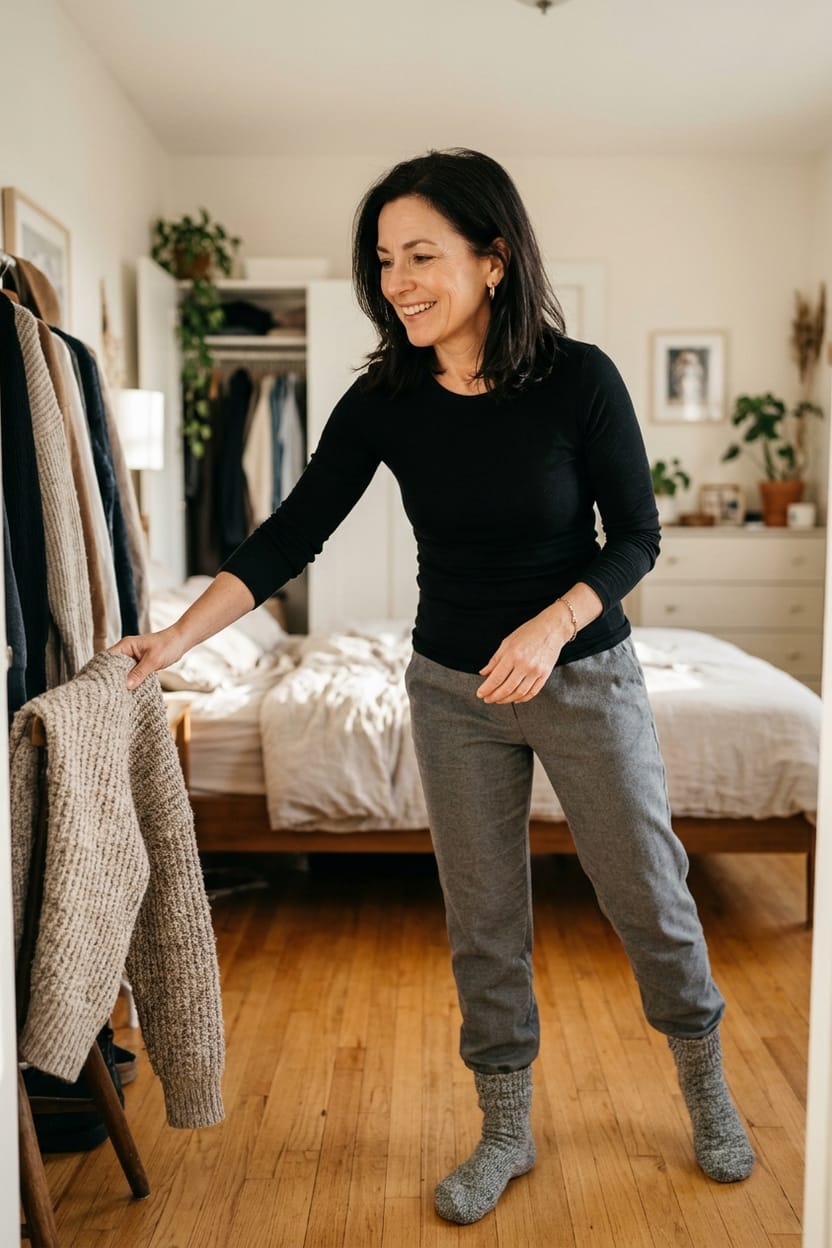
Your first layer should feel comfortable on your skin and lie flat, so that it doesn’t bunch under other clothes. For the coldest days or long periods outdoors, a thermal base layer adds warmth with little bulk.
Step 2: Add a middle layer you can remove

Pick a sweater or cardigan that still looks good when your coat comes off, because that’s what you’ll be wearing indoors. A front-opening cardigan or zipped fleece makes it easy to cool down.
Two thin layers are often more flexible than one thick one, since you can take one off.
Step 3: Match the outer layer to your weather

Your coat needs to fit over your other layers without pulling.
- Dry cold: wool coat or padded jacket
- Wet cold: water-resistant coat with a hood
- Wind: a coat that closes well at the neck and wrists
- Snow: a warm parka, ideally long enough to cover your hips
Keep your outfit neat
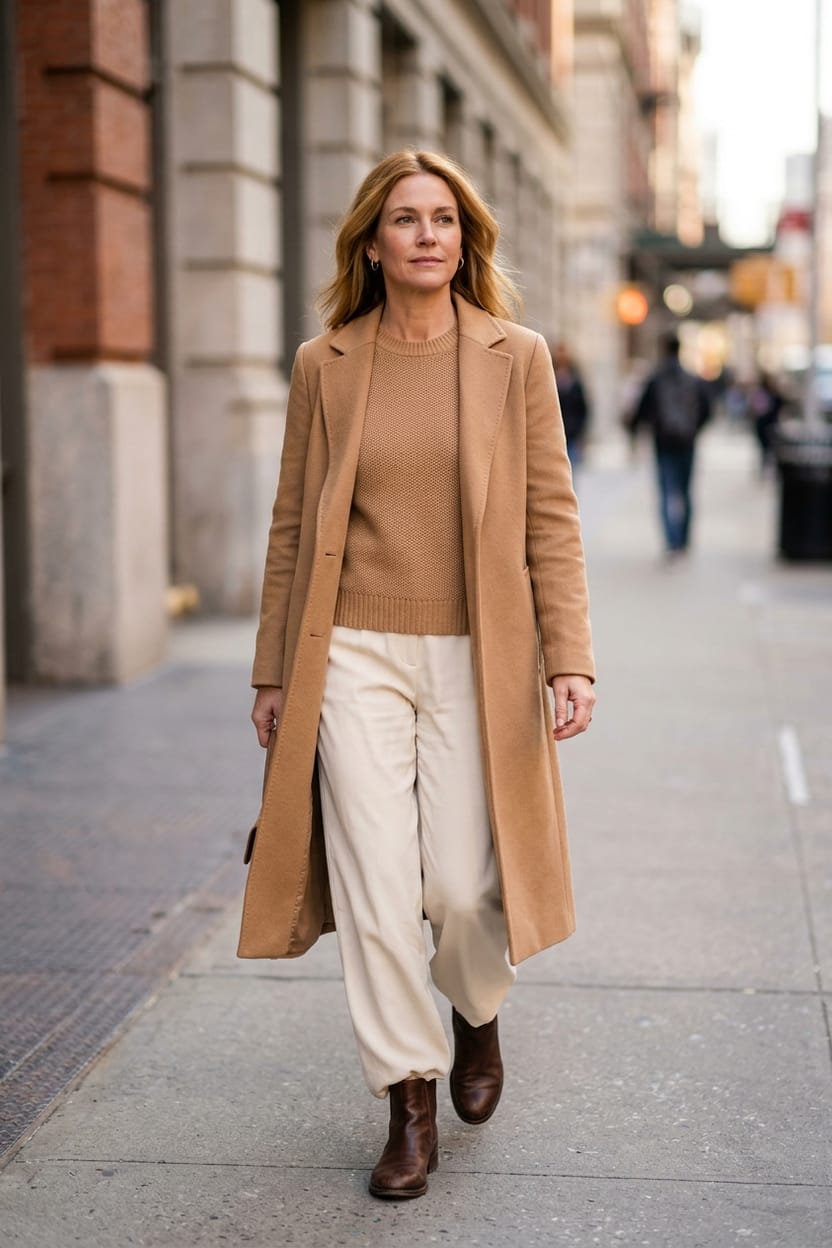
Bulk is usually the biggest complaint about layers. These habits help:
- Go from thin to thick. Start with your thinnest layer and put the thickest on the outside.
- Choose smooth fabrics underneath. Chunky knits can catch on the layers above them.
- Check the sleeves. Narrow coat sleeves may not fit over thick sweaters.
- Mind the hems. A slightly longer top can peek out on purpose, but a twisted one won’t look intentional.
- Use color. Layers in similar colors tend to look less bulky.
Don’t forget the extremities
Hats, gloves, scarves and warm socks can make a big difference to how comfortable you feel. They’re also the easiest things to take off when you get inside.
Three layered outfits to try
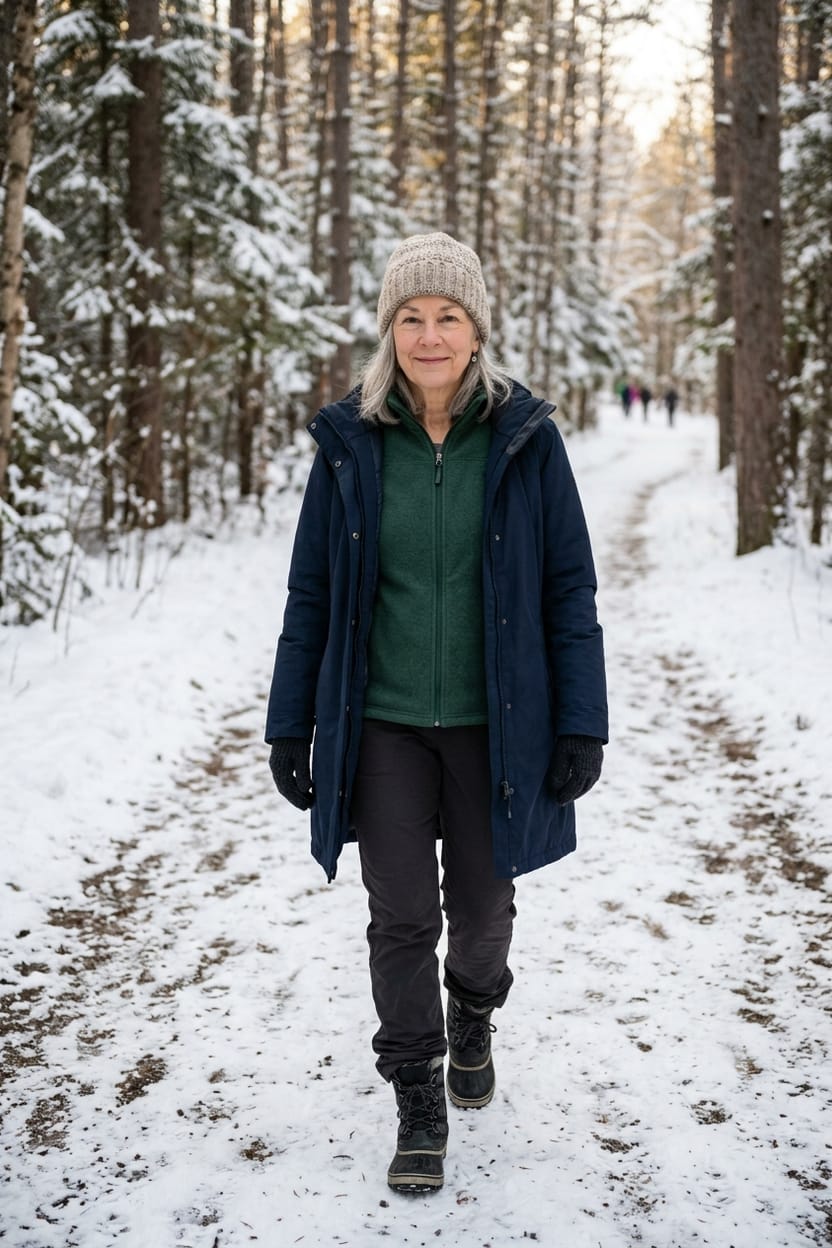
- Everyday cold: long-sleeve tee, fine-knit sweater, jeans, wool coat and ankle boots.
- Office day: turtleneck, blazer, tailored trousers, long coat and loafers or boots.
- Long walk: thermal top, fleece, warm trousers, parka, hat, gloves and waterproof boots.
When you get too hot
Feeling sweaty indoors and then cold outside is a sign you’re wearing too much heat in one piece. Replace a very thick sweater with a thinner sweater and an open cardigan, then remove the cardigan indoors.
Now see how these layers fit into a winter capsule wardrobe, or use the capsule wardrobe builder to choose pieces for your climate.